A puppy arriving in late December has a harder start than a puppy arriving in May. The house is loud, the schedule is wrecked, half the family is visiting, and there is tinsel at nose height. None of that is fatal. It just means the first thirty days need a plan rather than vibes.
Week one: the only job is predictability
Forget commands. Week one has three goals and none of them are obedience.
Sleep. A puppy needs somewhere between sixteen and twenty hours of sleep a day, and a puppy that does not get it looks exactly like a puppy with a behavior problem: mouthy, frantic, unable to settle. If your puppy turns into a land shark every evening at eight, it is almost never aggression. It is overtiredness.
The crate. Not as a punishment, as a bedroom. Feed meals in it with the door open. Put a chew in it and let the puppy choose to go in. Only then start closing the door for short stretches while you are in the room. A puppy that learns the crate properly in week one has a safe place for the rest of its life, including at the vet, in a hotel, and on the day someone leaves the front door open.
A toilet schedule you actually follow. Out after waking, after eating, after play, and every hour or so in between. Go to the same spot, stand still and boring, and reward the instant the puppy finishes, outside, not when you get back in. Accidents are information about your schedule, not about your puppy's character.
Week two: start socialization, properly
Socialization is the most misunderstood word in dog training. It does not mean "meet as many dogs and people as possible." It means build positive associations with the world at a distance the puppy can handle.
A puppy mobbed by six strangers at a pet store is not being socialized. It is being flooded, and some puppies come out of that experience permanently more suspicious of strangers, not less.
Do this instead:
- Sit on a bench near a parking lot and let the puppy watch carts, doors and people from thirty feet away. Feed for calm watching.
- Walk on three different surfaces this week. Gravel, metal grate, wet grass, tile.
- Introduce sounds deliberately and quietly: vacuum in the next room, a recording of fireworks at low volume while the puppy eats.
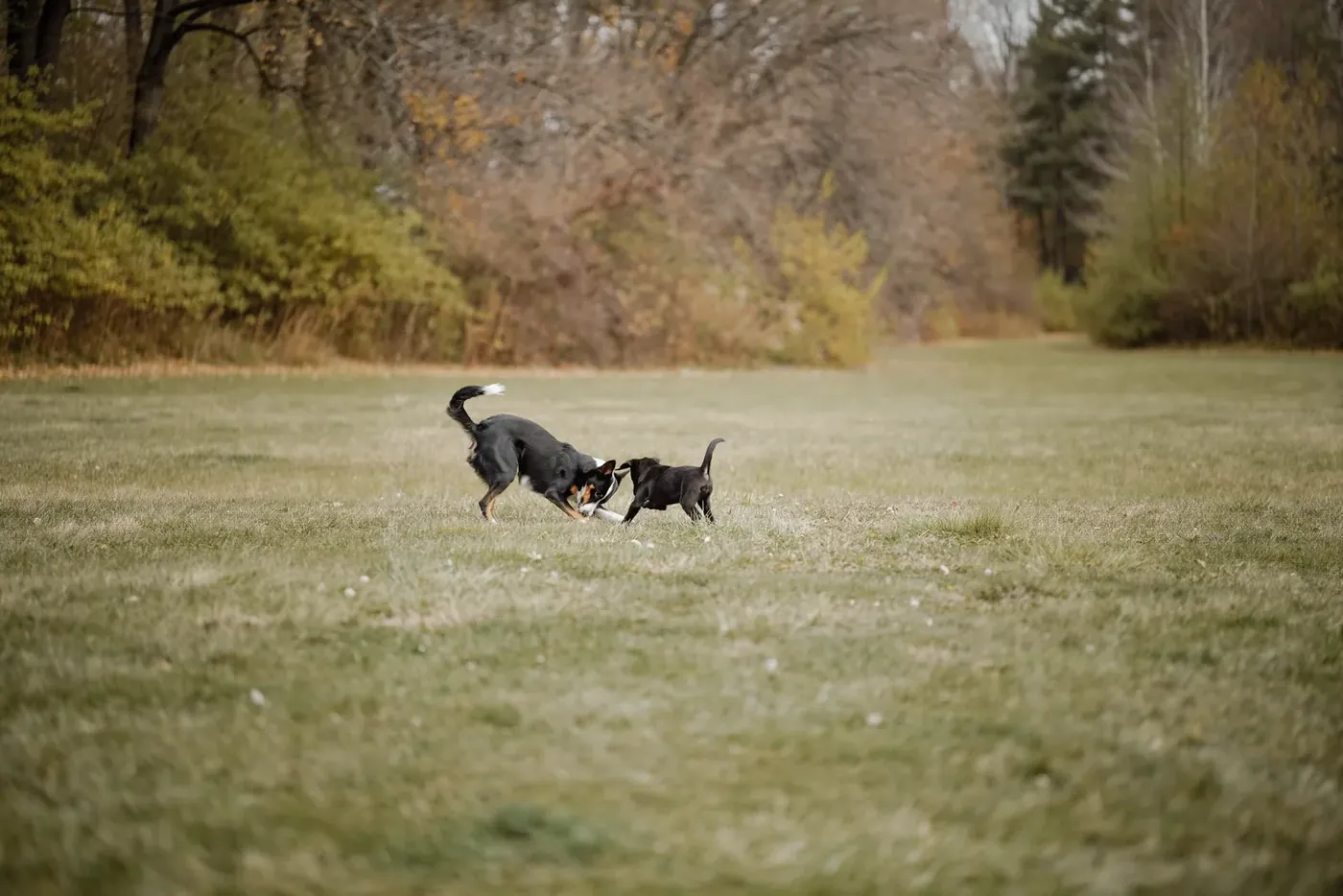
- Choose your dog introductions. One calm, vaccinated, known adult dog beats five strange puppies at a park.
If your puppy's vaccination schedule is not finished, your vet can tell you what is safe in your area. Carrying a puppy into the world still counts. Watching from your arms is still watching.
Week three: the three habits to prevent now
These are the three things owners call us about at eighteen months, and all three are vastly easier to prevent than to fix.
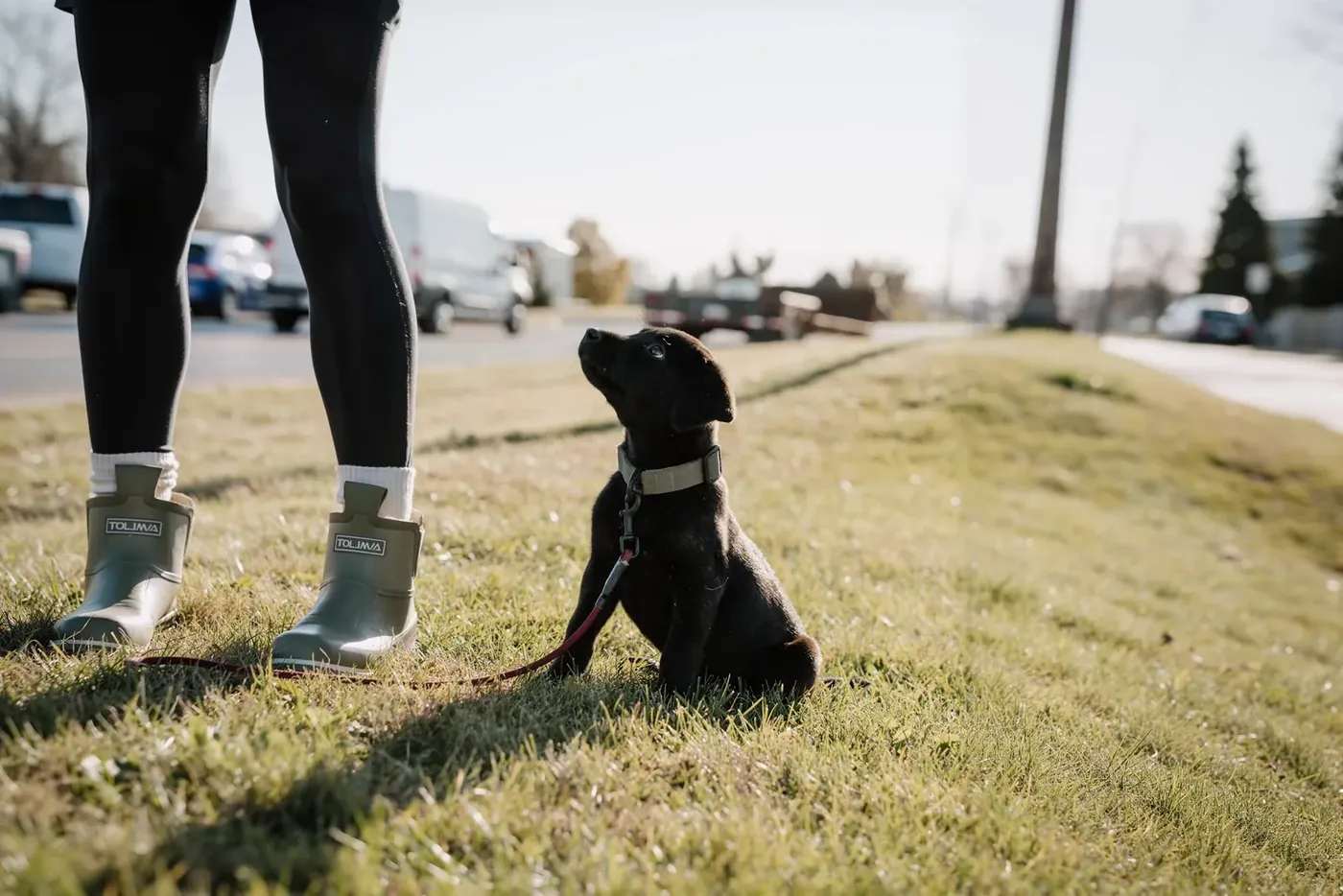
- Pulling. Every time a puppy drags you one step in the direction it wanted, pulling got paid. Stop walking when the leash goes tight. Move when it is slack. Your walks will be miserably slow for two weeks and normal forever after.
- Jumping for attention. Four feet on the floor gets petting. Two feet on your thigh gets a turned back. Everyone in the house has to be consistent, which is the hard part, not the rule.
- Guarding. Walk past the food bowl and drop something better in it. Trade for the stolen sock, never chase for it. A puppy that learns hands approaching means more good stuff does not become a dog that stiffens over a bone.
The behaviors that cost the most to fix at two years old cost about ten minutes a day to prevent at twelve weeks.
Week four: name the rules and keep them
By now the puppy has a schedule, a crate it likes and a reasonable opinion of the world. This is the point where structure starts paying off: short sessions, two or three minutes, several times a day, on sit, name recognition, and coming when called in a hallway with nothing else going on.
Keep sessions shorter than you think. Two good minutes beats ten minutes where the last six were mush.
And decide the household rules now, together, out loud. Is the couch allowed? Is the bed allowed? Who feeds the dog? The answers do not matter nearly as much as everyone giving the same answer.
When to bring in a trainer
Sooner than most people do. The window where you are shaping defaults instead of correcting habits is genuinely short, and it closes quietly.
Our puppy training program exists for exactly this stretch: foundations, socialization done correctly, crate and potty structure, and the handling skills that keep a good puppy from becoming a difficult adolescent at nine months. Find your local trainer and ask what they would do in your first month. Most of them will tell you a lot of it for free.