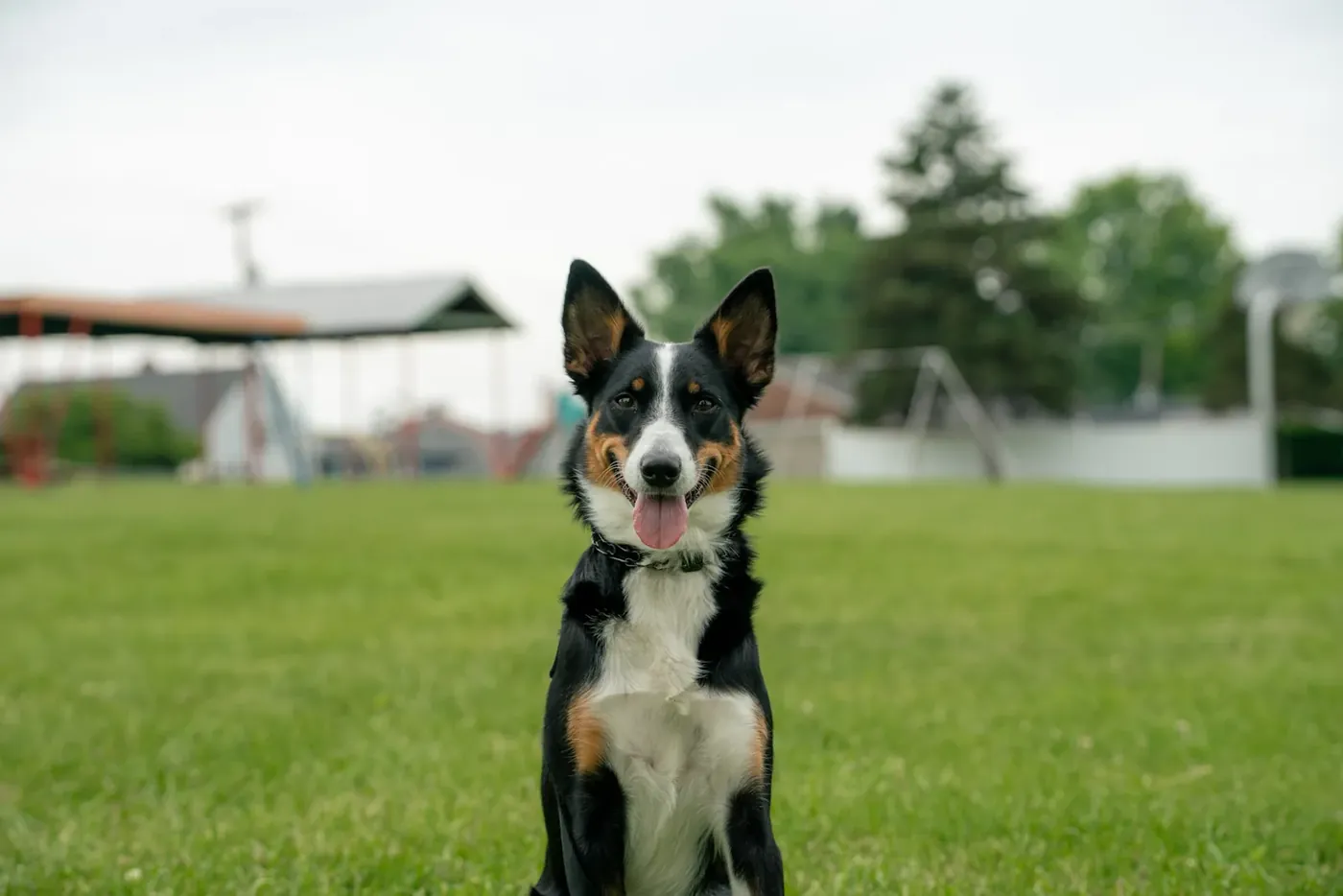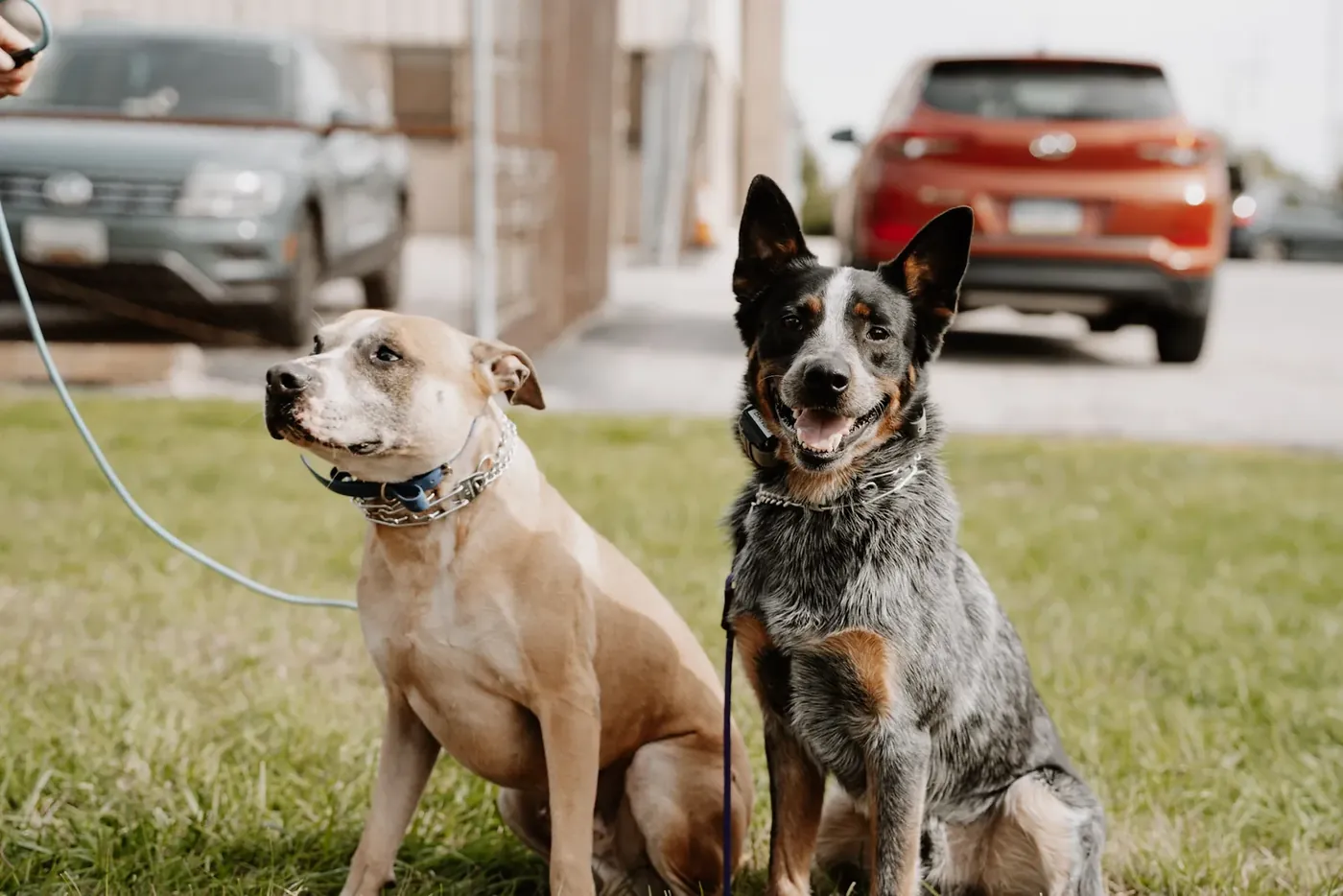
You see another dog two hundred feet away. Your dog sees it too, and the next fifteen seconds are a public performance: barking, lunging, screaming, a leash you are holding with both hands while someone across the street looks at you.
Then you get home and the same dog falls asleep upside down on the couch.
That contradiction confuses owners more than anything else in dog behavior, and it is the first thing worth getting straight.
Reactivity and aggression are different things
Aggression is intent to increase distance through force, and a dog showing true aggression is generally efficient about it. Low warning, fast commitment, and no interest in performing.
Reactivity is an emotional overreaction to a trigger. It is loud, it is frantic, and critically, it is usually about creating distance, not closing it. A huge share of reactive dogs, if you dropped the leash, would not run at the other dog at all. They would stand there, or move away.
That is why so many reactive dogs are completely normal at daycare, at the dog park, or at a friend's house. Off leash, they have options. On leash, they have none, and a frightened animal with no escape route does the only other thing available: it makes itself as loud and large as possible so the scary thing goes away.
It works every time. The other dog always does eventually walk past. From your dog's point of view, the barking is what did it.
Why the usual advice makes it worse
The three things owners most often try are the three things that reliably backfire.
Correcting the display. Punishing the bark can suppress the noise while leaving the fear completely intact, and sometimes it teaches the dog that the appearance of another dog predicts something unpleasant from you. Now the other dog is more threatening, not less. A dog that has learned not to warn is a harder dog, not a safer one.
Flooding. Marching the dog straight at the trigger so it "gets used to it" is not exposure therapy, it is being trapped. Dogs do not habituate when they are over threshold, they sensitize.
Avoiding everything forever. Walking at 5am and crossing the street every time keeps the peace and teaches nothing. The dog's world gets smaller each month.
What actually works: distance and association
The whole method rests on one concept: threshold. That is the distance at which your dog can see the trigger and still think, still eat, still hear you.
Find it honestly. For some dogs it is forty feet. For some it is a hundred and fifty. Whatever it is, that is where training happens.
Then the loop is simple and slow:
- Trigger appears at a distance your dog can handle.
- The moment your dog sees it and before it reacts, you mark and feed something genuinely good.
- Trigger goes away, food stops.
Over many repetitions, the appearance of another dog starts to predict chicken instead of conflict. You are not teaching obedience here, you are changing the emotional response underneath the behavior. The calm is a byproduct, not the target.
Then you close distance by a few feet at a time, over weeks, and you go backwards whenever the dog tells you that you moved too fast.
If your dog will not take food it would normally mug you for, you are too close. That is not stubbornness, that is a stress response, and nothing is being learned at that distance.
The management you need meanwhile
Training takes months. Life keeps happening. So:
- Walk where you can see far ahead. Open spaces beat blind corners.
- Know your emergency turn: a cheerful "let's go" and a 180, practiced when nothing is happening so it works when something is.
- Use a leash and equipment you can physically hold. A dog that gets loose in a reaction is a genuine safety problem.
- Stop apologizing to strangers. You are working on it, which is more than most.
When to get help, honestly
Call a professional if any of these are true: there is a bite history of any kind, the behavior is escalating, the dog redirects onto you or another dog in the house, or you have been working at it for a few months with no movement.
Reactivity cases are the ones where guessing costs the most, because the wrong plan does not just fail, it can make the dog worse. Our behavior modification program is built around threshold work with a trainer reading the dog in real time, which is the part that is nearly impossible to do from a video.
Every K9aholics location offers a free phone consultation. If your dog is at the stage where walks have become something you dread, that call is worth making.